How much time and money is your team wasting waiting for tooling?
Tooling is often the bottleneck that slows everything else down. When you’re waiting weeks for a supplier to manufacture a simple fixture, or you have to delay production because a jig hasn’t arrived, the knock-on effect can be felt across your entire operation. Your production schedules slip, your engineers have to spend time finding workarounds, and you never get the opportunity to improve efficiency.
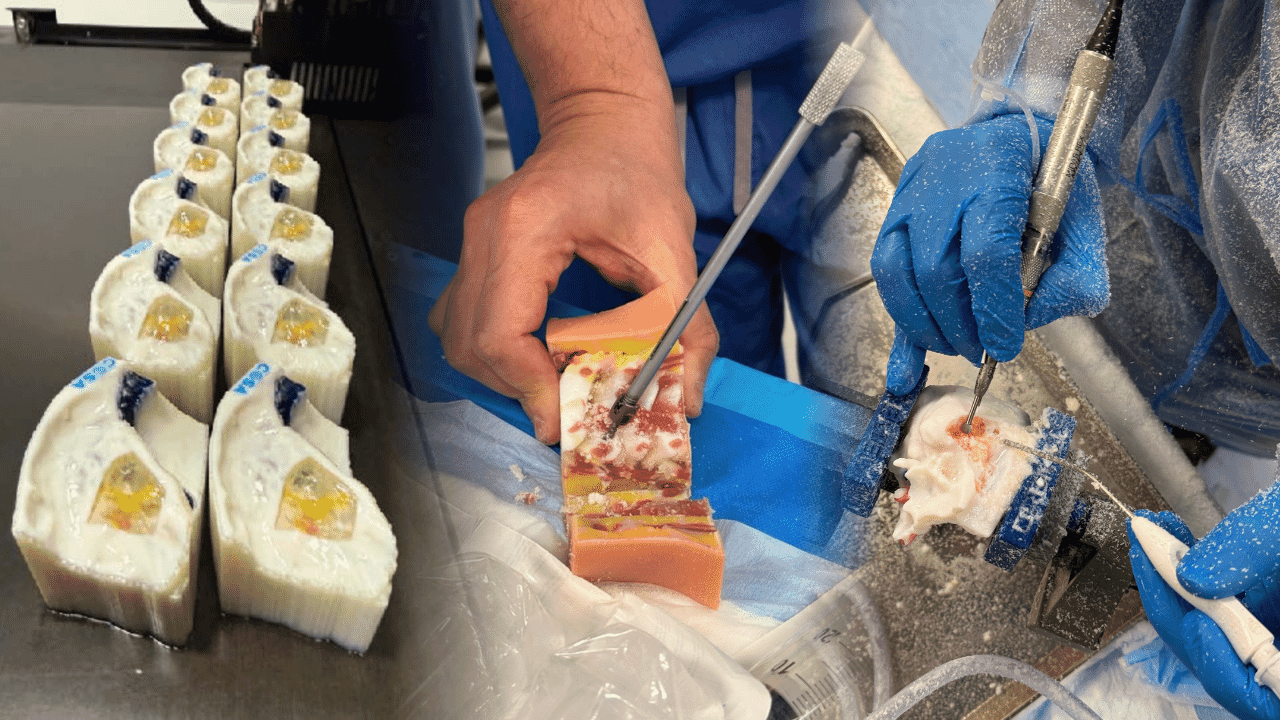
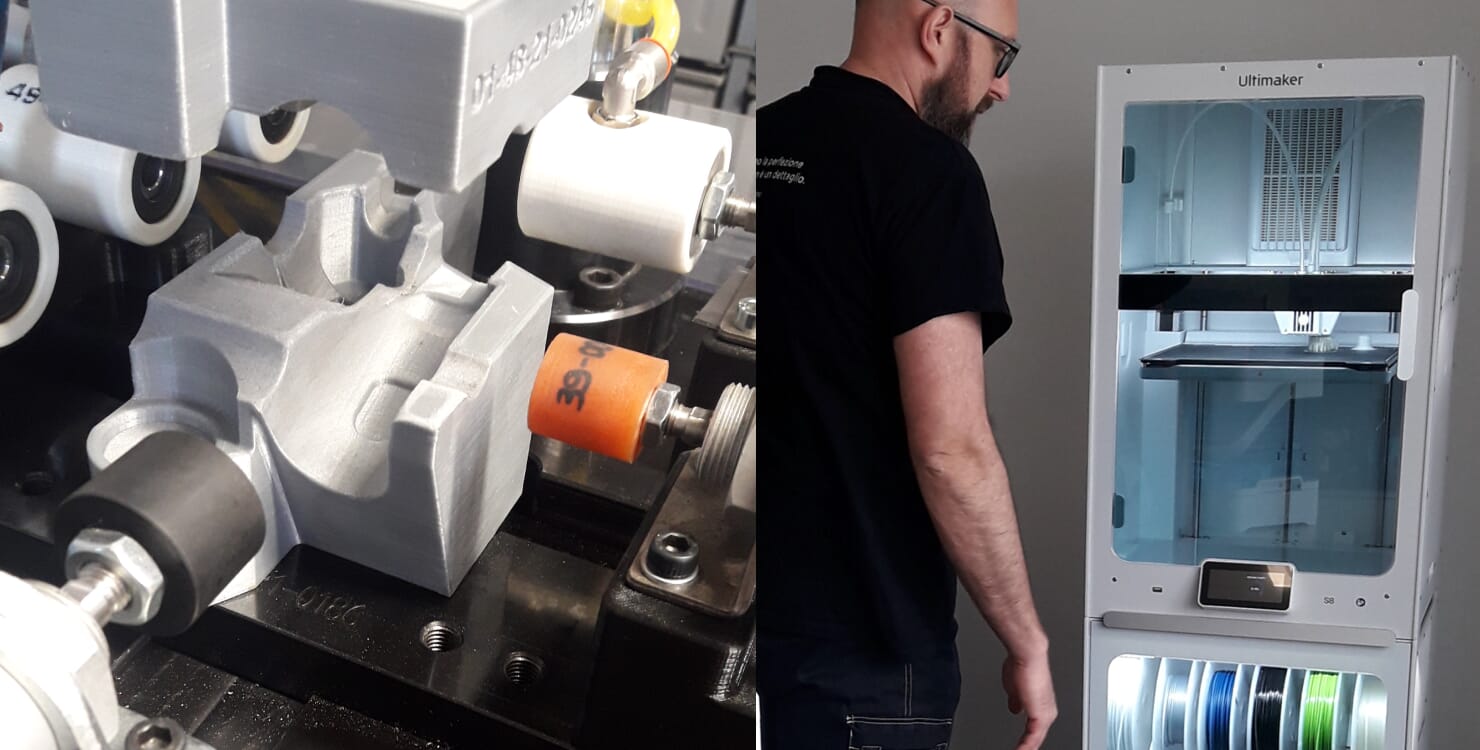
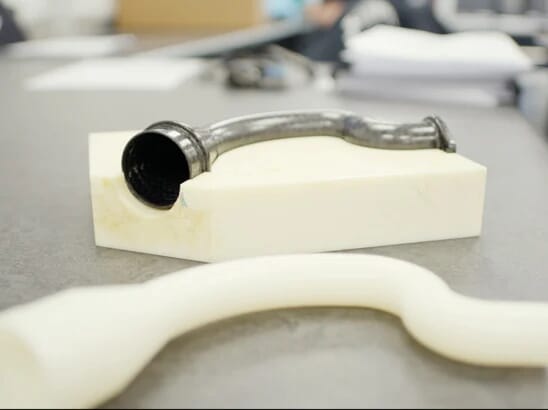
But the good news is that you can achieve significant time and cost savings with 3D printed tooling. By bringing your tooling production in-house with a 3D printer, you can produce jigs, fixtures, moulds, drill guides, and manufacturing aids on demand, helping you reduce lead times and gain greater control over your processes.
However, not all 3D printing solutions deliver the same long-term value. Below, we uncover the issues with investing in lower-cost printers, and explain why manufacturers across a wide range of industries are investing in Stratasys FDM technology.
Why conventional tooling keeps costing you
Traditional tooling methods still have their place, particularly if you’re producing high volumes over a long period of time. But what happens when you need a custom jig for a new assembly process, or a fixture for a short production run?
In these situations, conventional manufacturing methods can quickly become expensive. CNC machining, cast aluminium tooling, and outsourced fabrication all come with high setup costs and lead times. So if you’re only using the tool for a specific project or limited production run, the ROI can be difficult to justify.
And that’s not all – there’s also the hidden costs to consider. If a fixture is delayed, this can hold up production and impact your delivery schedules. Or if a tool no longer fits the latest version of a product, your operators may waste time on setup or finding workarounds. Even a simple design change could hold you up for weeks, forcing you to go back to the supplier and wait for a new quote.
How Stratasys FDM changes the tooling equation
Speed up lead times
Stratasys FDM printers allow you to produce strong, accurate, and repeatable tools directly from your CAD files using engineering-grade thermoplastics. Instead of having to send a jig out for manufacture, wait for it to come back, test it, and then repeat the process whenever you need to make changes, you can design, print, test, and refine everything in-house. This speeds up lead times and allows you to respond much quicker when your production requirements change.
Keep your costs under control
The material cost of a 3D printed engineering component is often much lower than its machined equivalent, especially when you’re working with complex geometries. Features that would be expensive to machine, such as internal channels, lightweight structures, ergonomic grips, or integrated fastener points, can be incorporated into your printed design far more efficiently and cost-effectively.
Better tooling through better design
Once you switch to a Stratasys printer, there’s no need to compromise on tool design. If your fixture would perform better with a conformal surface, a clearer locator, a lighter body, or a more comfortable handling point, then you can build those features in from the outset. Because design changes and iterations are fast and cost-effective, you can continually improve your tooling rather than settling for a solution that’s just “good enough”.
The issues with lower-cost 3D printers
Why invest in a Stratasys system when there are cheaper 3D printers available? The answer all comes down to total cost of ownership.
A lower-cost printer might be cheaper to purchase upfront, but the ongoing challenges quickly outweigh the initial savings:
- Failed prints can waste your materials and take valuable engineering time away from more important tasks
- Inconsistent dimensional accuracy can leave you with tooling that needs rework or doesn’t perform as expected
- Limited ranges of materials can prevent you from meeting specific mechanical, thermal, or ESD requirements
- Unreliable machine performance can cause unexpected downtime and disrupt your production schedule
- Reduced repeatability can make it difficult for you to produce consistent tooling time after time
So, what looks like a saving when you buy the printer can actually end up costing you far more over its lifetime.
Why Stratasys is the smarter investment
When you’re producing tooling for manufacturing environments, you need to be confident that every print will perform as expected. That’s where Stratasys 3D printers come in.
Proven performance for your tooling application
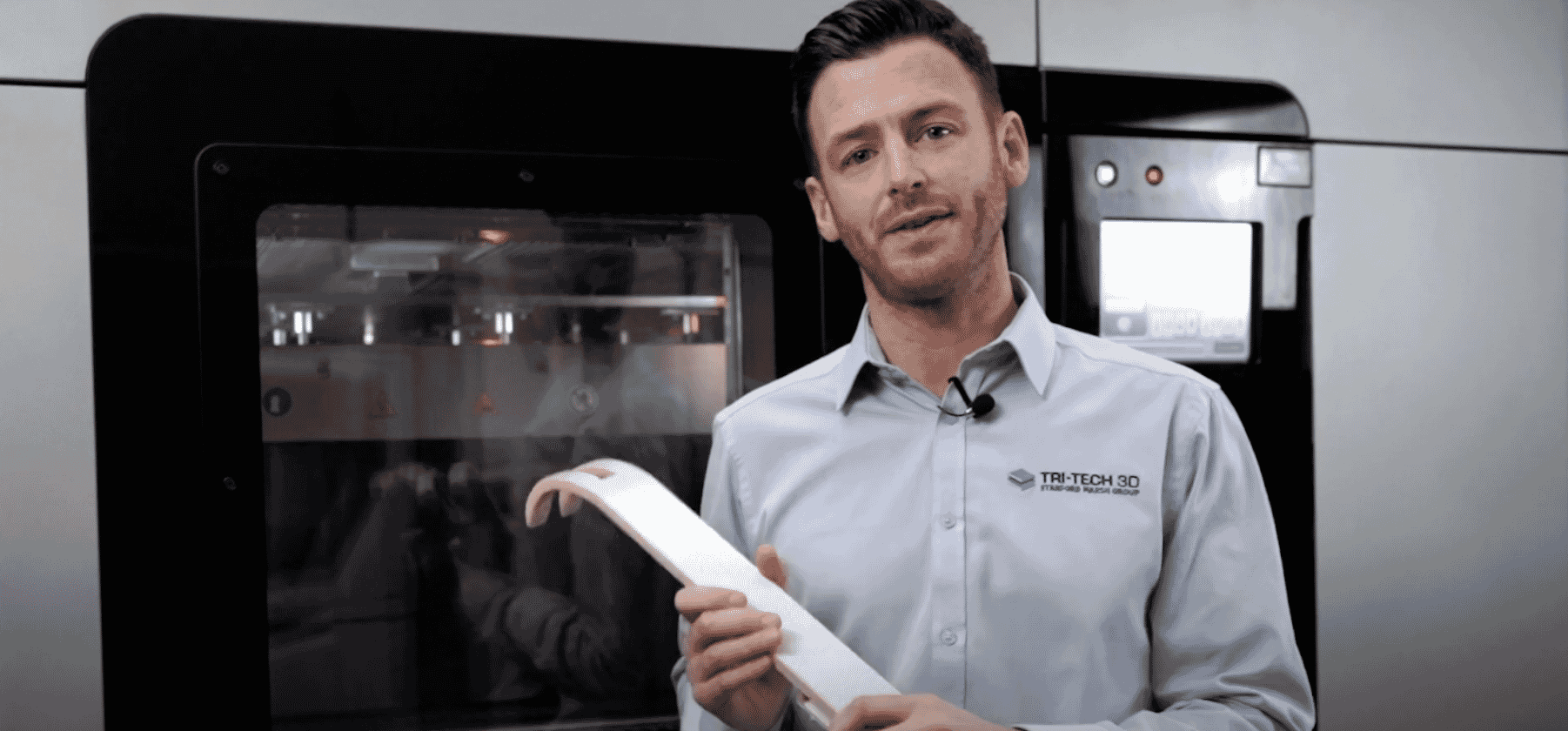
Tri-Tech 3D supplies a wide range of Stratasys tooling 3D printers in the UK, with each offering unique benefits for different applications:
- Producing tooling or manufacturing aids on a regular basis? The Fortus 450mc gives you a proven platform with access to a wide range of materials
- Need larger fixtures or production tools? The Fortus 900mc offers a larger-format capability without ever compromising on accuracy
- Operating in a higher-volume production environment? The Stratasys F3300 gives you the speed, quality, and throughput you need to support continuous manufacturing
Flexible materials to suit your needs
Material flexibility is another major advantage. With Stratasys FDM technology, you can choose from an impressive portfolio of advanced thermoplastics including ULTEM 9085, ULTEM 1010, Nylon 12 CF, and ABS-ESD7. This allows you to select the right material based on the demands of the application, whether you require heat resistance, stiffness, lightweight strength, or static dissipative properties.
Expert, personalised support at every step
When you invest in a Stratasys system through Tri-Tech 3D, you’re also investing in a partner that will help you get the maximum value from your printer. From helping you identify the right tooling applications and materials to providing installation, training, and ongoing technical support, our expert team is here to help you adopt 3D printing into your workflow with confidence.
Ready to explore how 3D printed tooling could improve your manufacturing process?
Speak to our team today.
FAQs
How does 3D printing reduce tooling costs?
3D printing allows you to produce tooling in-house, which reduces your supplier costs, machining expenses, and lead times. It’s particularly effective for low-volume, bespoke, or frequently updated tooling applications.
Is FDM suitable for engineering tooling?
Yes, FDM is widely used for 3D printed engineering tooling, including assembly fixtures, drill guides, inspection fixtures, moulds, end-of-arm tooling, and manufacturing aids.
Which Stratasys printer is best for tooling?
The right Stratasys system all depends on your application. The Fortus 450mc is ideal for many tooling requirements, while the Fortus 900mc supports larger fixtures, and the F3300 is designed for higher-throughput manufacturing environments.
New to 3D
Printing or looking
for some support?
- Call: 01782 814551
- Email: info@tritech3d.co.uk