What usually happens when a critical machine goes down on your production line? Do you have to wait weeks, or even months, for a replacement part? And watch your project stall because the shipment hasn’t turned up? This scenario happens all too often for UK manufacturers.
Global conflict, congested shipping lanes, rising freight costs, and unreliable material available have all exposed just how fragile traditional manufacturing really is. But you don’t have to accept this as the new normal. 3D printing is already helping manufacturers like you to take back control. You can produce the components you need in a matter of hours rather than months, and do it far closer to home. Here’s how 3D printing can improve supply chain resilience and help you produce parts as and when you need them.
Bring manufacturing back to the UK
The drive to cut down unit costs has likely pushed you to source parts and tooling from overseas. That approach worked fine when shipping was reliable and politics weren’t getting in the way. But today, it’s a different story. The ongoing conflict in Eastern Europe and the Middle East, coupled with rising trade tensions, has now turned long-distance supply chains into a liability for your business.
3D printing gives you a direct way to address this. Rather than relying on a supplier on the other side of the world, you can produce tooling, jigs, fixtures, and end-use parts in-house or through a trusted UK partner. You don’t have to worry about your parts being sat in transit or custom delays disrupting your schedule. Instead, you get far more control over when and how your production happens. If you work in demanding sectors like defence, aerospace, or rail, delays can make a serious dent in your operations. So it’s vital to build this local capability into your projects.
Print the parts you need, when you need them
Traditional manufacturing involves predicting how many parts you’ll need, often months or even years ahead. And then you’ll need to pay to store the stock until it’s required. If you get the forecast wrong, you could be stuck with excess inventory, or end up scrambling to source parts at the last minute.
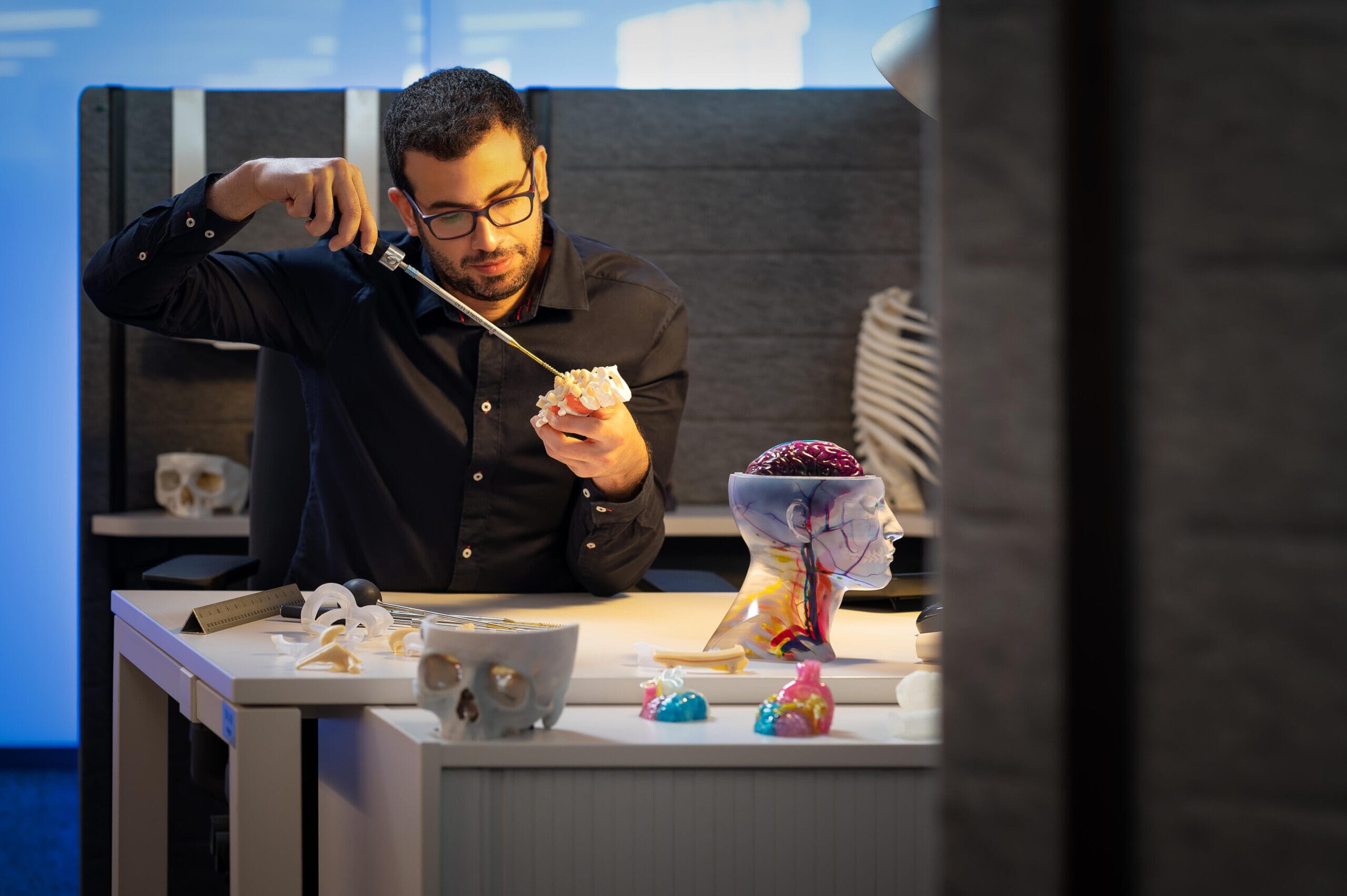
3D printing changes this equation for you. Your parts exist as digital files rather than physical stock, meaning you can print them the moment you need them, in the exact quantity you require. If you’re running low-volume production or need a one-off replacement part, you can produce it without the lead times or minimum order quantities that come with traditional tooling and moulding. This is a huge advantage if a critical part is delayed, or a supplier discontinued something you rely on.
Move production closer to your team
Are you relying on just one factory or one overseas supplier to carry your entire production? If so, you’re putting all your risk in one place. Whenever that site faces a shortage or delay, your whole operation grinds to a halt with it. And the further away that site is, the longer your operations are delayed, and the more it costs you to put things right.
Localised production with 3D printing changes everything. Instead of centralising all that risk in one place, you can print parts across multiple sites near where your team actually needs them. This reduces your exposure to risk, cuts down on the shipping and logistics involved in getting parts from A to B, and gives you more flexibility to respond when something changes at short notice.
Build a leaner, greener supply chain
3D printing can help you cut material waste, reduce excess stock, and shorten your supply chain. Printing parts only when you need them stops stock from sitting unused in your warehouse, only to be scrapped later on. You’ll use the exact material needed to print the part, rather than machining it down from a larger block and binning the offcuts. And producing parts close to home equals less distance travelled, less packaging, and less fuel burnt getting them to you. All of this helps you build a much leaner, greener supply chain.
Unlock the additive manufacturing advantage with Tri-Tech 3D
3D printing is only as powerful as the expertise behind it. As the UK’s leading provider of Stratasys and One Click Metal systems, we’ve helped businesses across defence, aerospace, medical, and engineering turn additive manufacturing into a supply chain superpower.
Our 3D printing experts will work with you to identify exactly where this cutting-edge technology can reduce risk and improve the resilience of your supply chain; backed by the training, servicing, and technical support you need to keep it running. Get in touch to talk through your next project.
FAQs
How does 3D printing improve supply chain resilience?
3D printing reduces your reliance on long, single-source supply chains by enabling you to produce parts on demand, closer to where you need them. This cuts your exposure to shipping delays and custom disruption, while reducing the need for large stockpiles of spare parts.
Can additive manufacturing really support UK reshorting efforts?
Yes, 3D printing is playing a major role in reshoring UK manufacturing. It reduces many of the barriers that pushed your production overseas in the first place, such as expensive tooling and long lead times. This makes it far more practical for you to bring production back on-shore or to a trusted UK partner.
What is on-demand manufacturing, and how is it different from traditional production?
On-demand manufacturing allows you to produce parts when you need them, using digital files rather than physical stock. Unlike traditional manufacturing, which relies on forecasting and storing inventory in advance, this approach reduces your waste, storage costs, and the risk of over or under-ordering.
Is 3D printing a sustainable manufacturing solution for my business?
3D printing isn’t automatically more sustainable than traditional manufacturing in every case. However, it can reduce your material waste, cut down on unnecessary stock, and shorten your supply chains. This helps to reduce your environmental footprint as a byproduct of improved efficiency.
Which industries benefit most from localised 3D printing production?
If you work in a sector with high-value supply chains, such as defence, aerospace, rail, or medical, then you’re likely to see the biggest benefits from 3D printing. These industries are often exposed to long lead times and legacy part shortages, which additive manufacturing can help to solve.
New to 3D
Printing or looking
for some support?
- Call: 01782 814551
- Email: info@tritech3d.co.uk