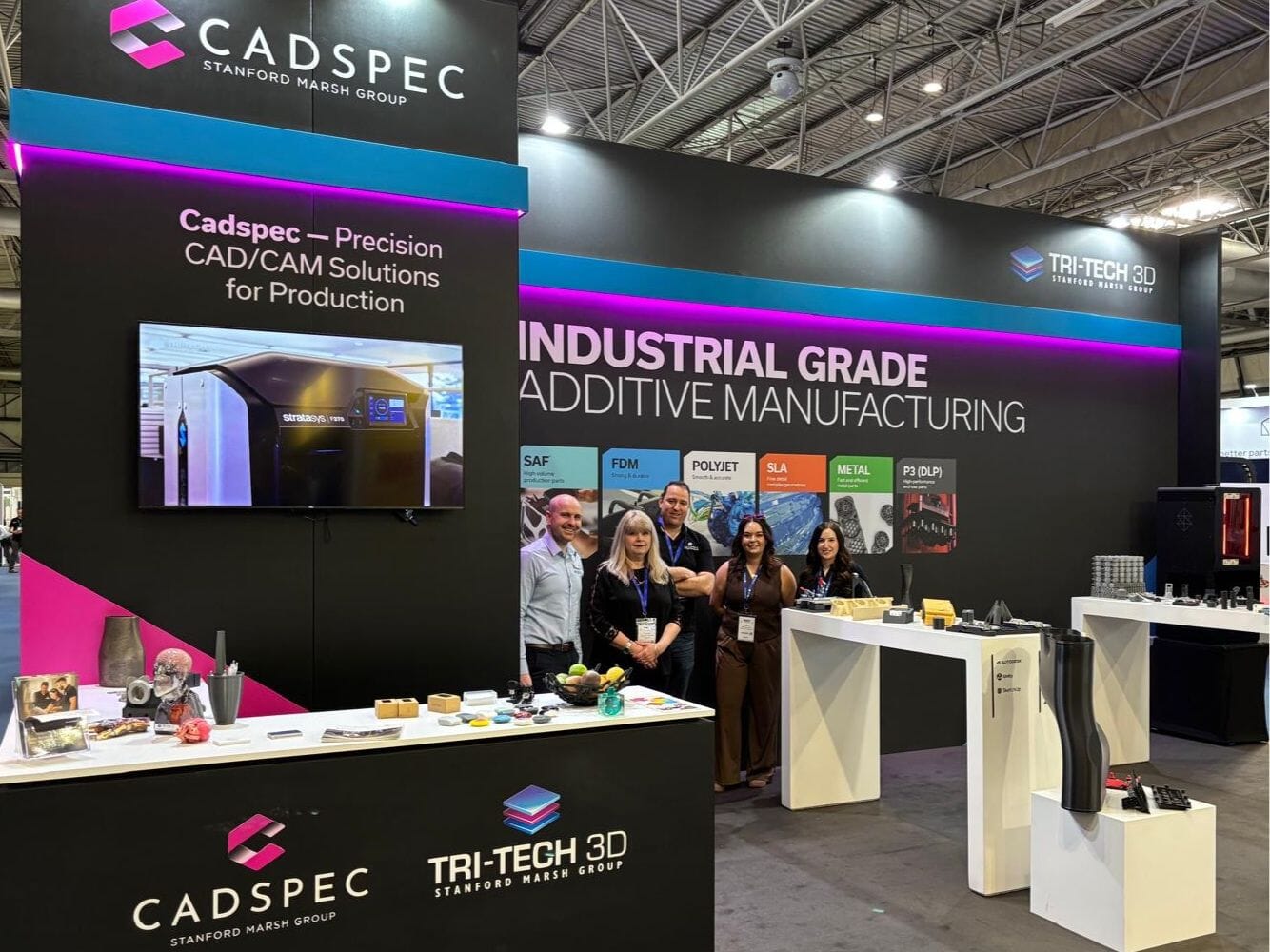
Industrial 3D Printing Is Reshaping UK Manufacturing
The conversations at MACH 2026 made one thing clear: UK manufacturers are under increasing pressure to become faster, leaner, and more resilient.
From rising production costs and supply chain disruption to ongoing engineering skills shortages and demands for greater operational flexibility, manufacturers across multiple sectors are re-evaluating traditional production methods and investing in smarter manufacturing technologies.
MACH highlighted how Industrial 3D Printing is rapidly becoming a core part of modern manufacturing transformation strategies.
What was once viewed primarily as a prototyping tool is now being adopted as a practical manufacturing solution capable of reducing lead times, improving production agility, lowering tooling costs, and supporting end-use production applications.
As additive manufacturing technologies continue to mature, businesses are increasingly recognising the value of Industrial 3D Printing for improving efficiency, accelerating innovation, and strengthening supply chain resilience.
Why Industrial 3D Printing Is Becoming Essential for Modern Manufacturing
As manufacturers modernise operations and embrace Industry 4.0 initiatives, additive manufacturing is helping businesses respond faster to changing production demands while improving overall operational efficiency.
Throughout MACH, manufacturers consistently discussed challenges including:
- Rising manufacturing and raw material costs
- Supply chain instability and long lead times
- Reduced lead time expectations from customers
- Engineering and manufacturing skills shortages
- The need for greater production flexibility
- Digital transformation and smart factory adoption
Industrial 3D Printing directly addresses many of these issues by enabling businesses to produce components on demand, reduce reliance on outsourced tooling, and accelerate product development cycles.
For many UK manufacturers, additive manufacturing is no longer considered an experimental technology, it is rapidly becoming a competitive advantage.
Manufacturers Are More Educated About Additive Manufacturing Than Ever Before
One of the most noticeable changes at MACH was the growing technical understanding among manufacturers exploring Industrial 3D Printing solutions.
Conversations are becoming increasingly application-focused. Rather than simply asking whether a component can be 3D printed, manufacturers are now asking more advanced questions such as:
- Which 3D printing material offers the best thermal resistance?
- Which additive manufacturing technology delivers the required surface finish?
- Can Industrial 3D Printing replace traditional tooling methods?
- Which material provides the best strength-to-weight ratio?
- How can additive manufacturing reduce downtime and production bottlenecks?
This growing awareness reflects the increasing maturity of additive manufacturing across UK industry.
However, selecting the correct technology and material remains critical. Different manufacturing applications require different performance characteristics, including:
- Mechanical strength
- Heat resistance
- Chemical resistance
- Flexibility
- Durability
- Dimensional stability
This is why specialist additive manufacturing expertise remains essential when integrating Industrial 3D Printing into production workflows.
High-Performance Polymers Are Replacing Traditional Metal Tooling
A major trend throughout MACH was the growing adoption of advanced polymer materials as alternatives to traditional metal tooling.
Many manufacturers were surprised by the level of mechanical performance now achievable using industrial additive manufacturing materials.
Applications including:
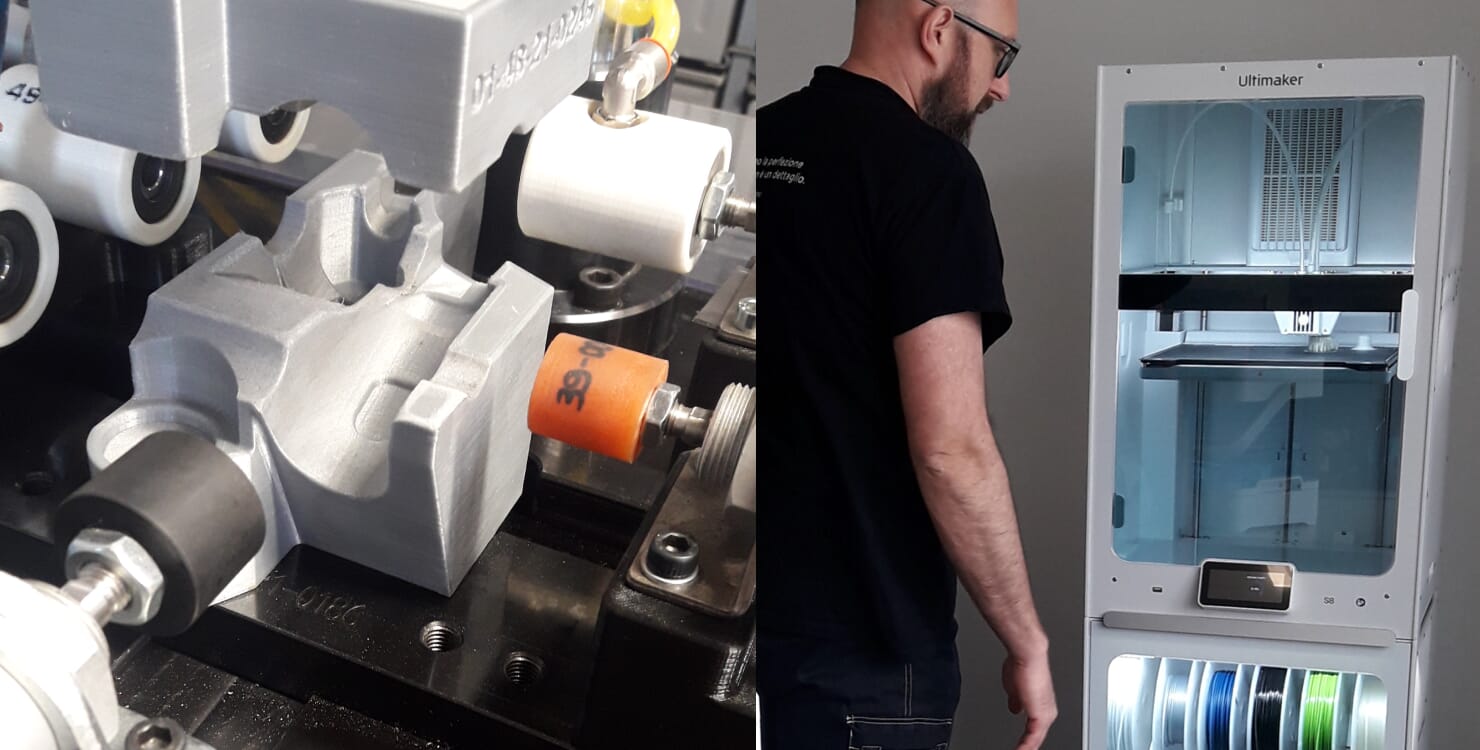
- Manufacturing fixtures
- Holding jigs
- Sheet metal forming tools
- End-of-arm tooling
- Production aids
- Low-volume tooling
can often be produced faster and more cost-effectively using industrial polymers rather than machined metal components.
Benefits of 3D Printed Tooling
Manufacturers are increasingly adopting additive manufacturing for tooling applications because it offers:
- Reduced production lead times
- Lower tooling costs
- Lightweight component designs
- Faster design iteration
- Improved operator ergonomics
- Easier maintenance and replacement
- Reduced material waste
For many production environments, Industrial 3D Printing is enabling more agile and responsive manufacturing operations.
NYLON 12CF Generated Significant Interest
One material that attracted particular attention throughout the exhibition was NYLON 12CF.
This carbon fibre-reinforced thermoplastic combines exceptional stiffness, strength, and durability, making it ideal for demanding manufacturing environments where traditional metal tooling may no longer be the most efficient option.
Manufacturers exploring lightweight yet highly durable tooling solutions saw significant potential in the material’s ability to withstand production demands while reducing both manufacturing time and component weight.
NYLON 12CF is particularly well suited for:
- Functional tooling
- Production fixtures
- Lightweight manufacturing aids
- Structural industrial components
- End-use production parts
Its performance characteristics continue to make it one of the most popular materials for industrial additive manufacturing applications.
Flexible Additive Manufacturing Materials Are Expanding Industrial Applications
Another key trend from MACH was the growing interest in flexible additive manufacturing materials.
Industrial elastomers are creating new opportunities for manufacturers requiring components that combine flexibility, durability, and chemical resistance.
Typical applications include:
- Seals
- Gaskets
- Protective covers
- Wearable products
- Flexible industrial components
- Shock absorption features
At the exhibition, P3 Silicone 25A generated strong interest due to its excellent tear strength, elongation, and long-term environmental resistance.
Its ability to maintain performance across wide temperature ranges makes it highly suitable for demanding industrial applications where reliability and resilience are essential.
Industrial 3D Printing Has Moved Beyond Prototyping
Perhaps the biggest takeaway from MACH is that Industrial 3D Printing has firmly moved beyond prototyping.
Across UK manufacturing, additive manufacturing is now being integrated into real-world production environments to support:
- Faster product development
- Agile manufacturing strategies
- Reduced inventory requirements
- Low-volume production
- Custom tooling solutions
- Supply chain resilience
- On-demand manufacturing
Businesses are increasingly recognising that Industrial 3D Printing can improve operational efficiency while supporting innovation and long-term competitiveness.
As manufacturing continues to evolve, additive manufacturing is expected to become an increasingly important technology for companies looking to remain competitive in rapidly changing global markets.
How Tri-Tech 3D Supports UK Manufacturers
At Tri-Tech 3D, we work closely with manufacturers across the UK to identify the right Industrial 3D Printing technologies, materials, and workflows for their applications.
From functional prototyping and production tooling to end-use manufacturing and advanced materials, our team helps businesses unlock the full potential of additive manufacturing.
We support manufacturers looking to:
- Reduce production lead times
- Improve operational efficiency
- Lower tooling costs
- Accelerate product development
- Improve manufacturing flexibility
- Increase supply chain resilience
As the manufacturing sector continues to evolve, Industrial 3D Printing will play a critical role in helping businesses improve efficiency, reduce costs, and drive innovation.
Explore Industrial 3D Printing Solutions with Tri-Tech 3D
If you would like to explore how Industrial 3D Printing could support your manufacturing operations, contact the Tri-Tech 3D team today to discuss your application requirements and discover the right additive manufacturing solution for your business.
New to 3D
Printing or looking
for some support?
- Call: 01782 814551
- Email: info@tritech3d.co.uk