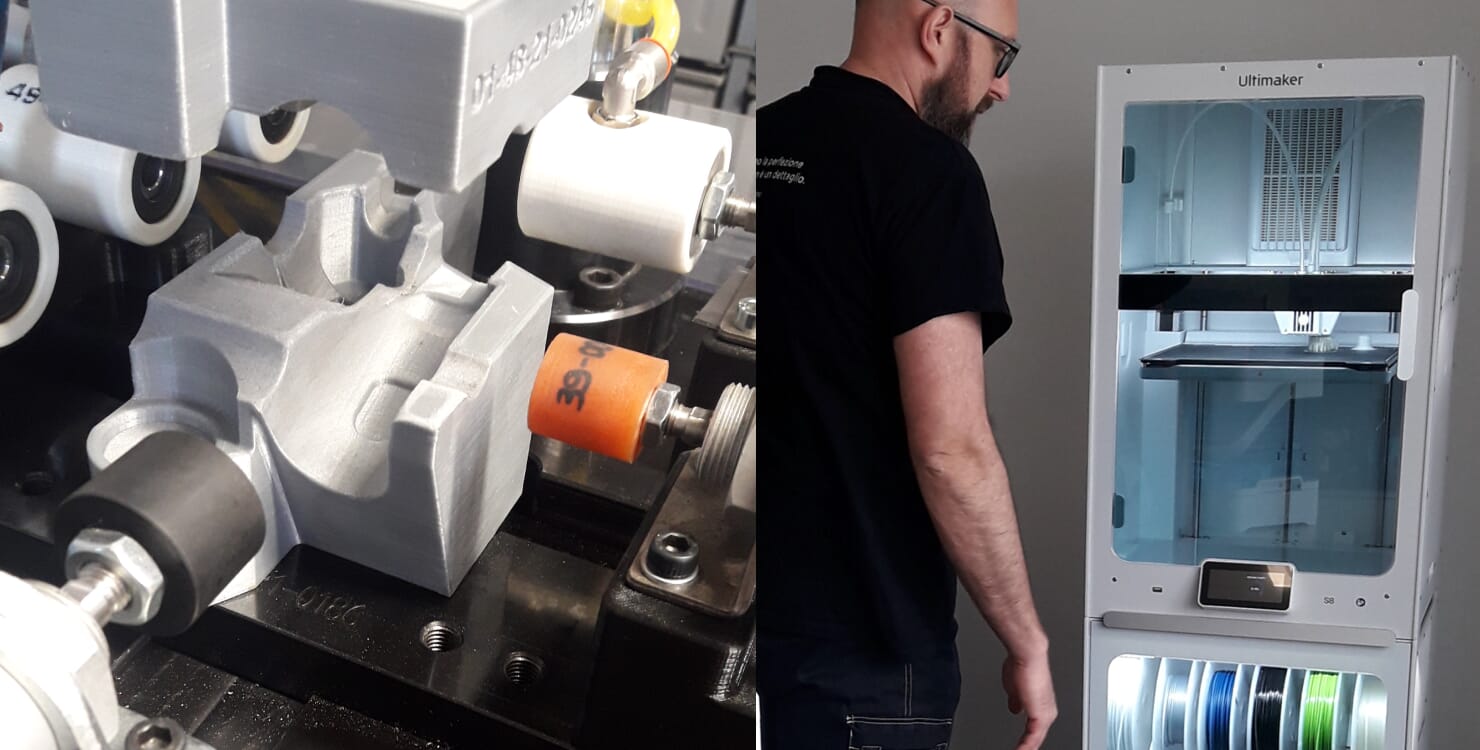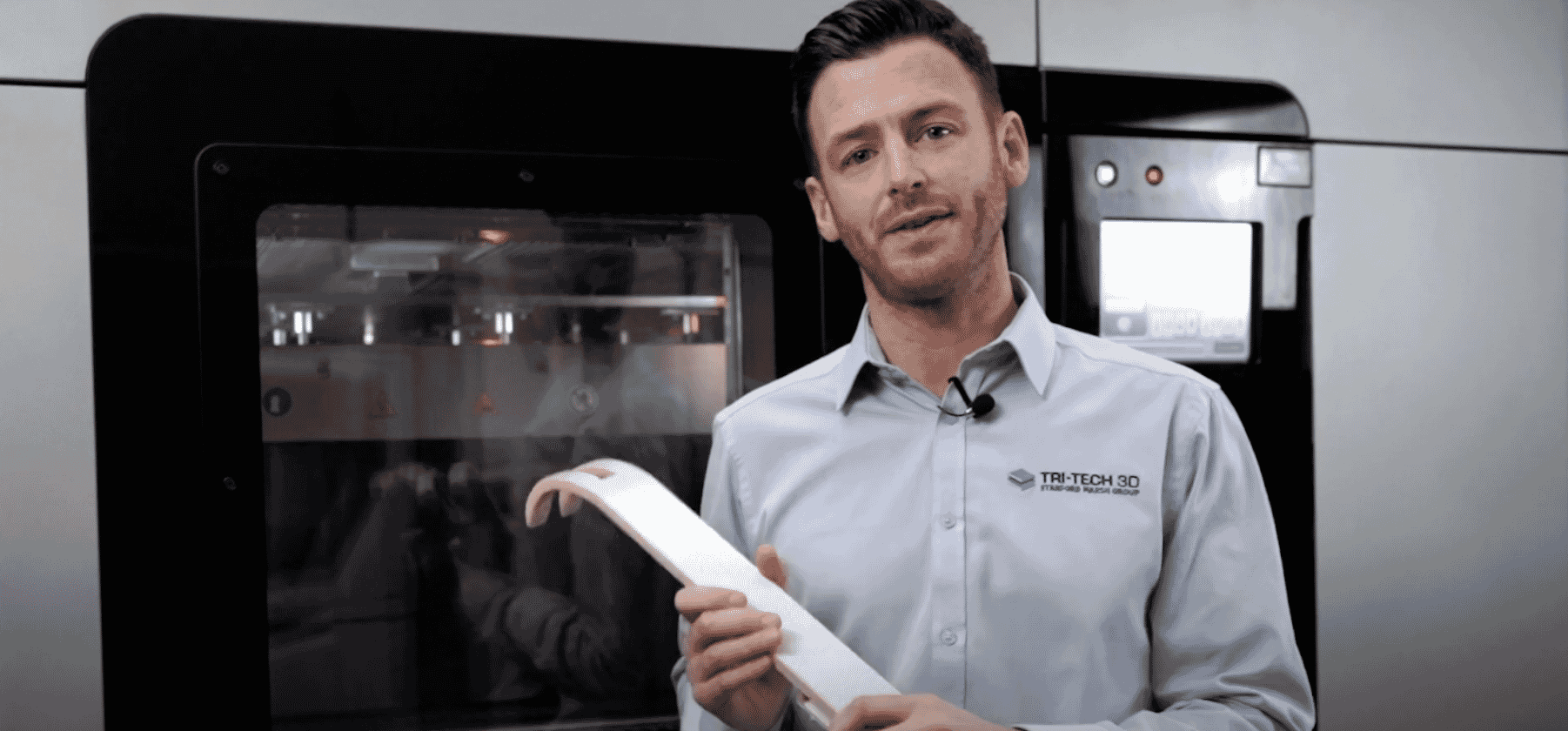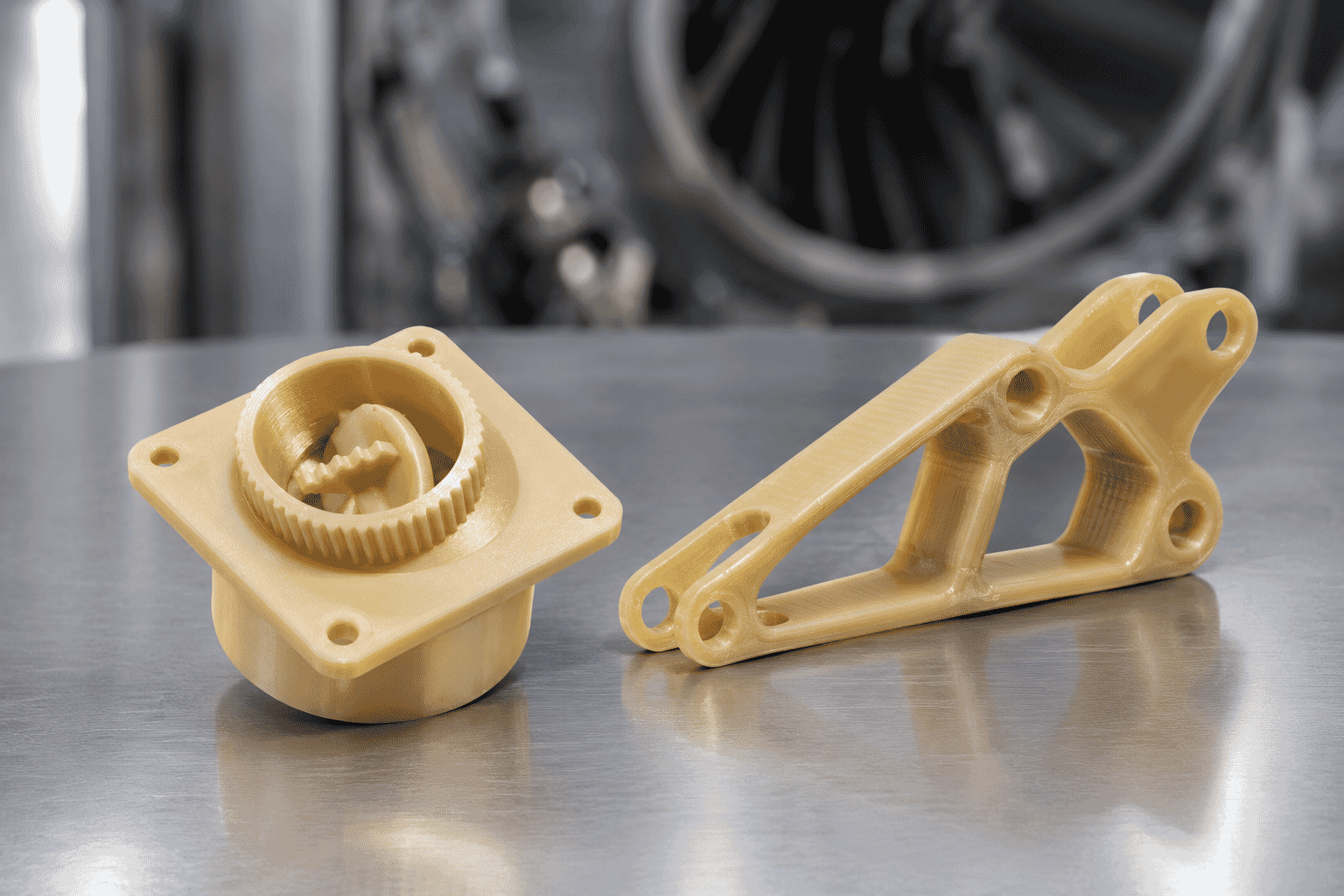
Indaero is using Stratasys additive manufacturing technology to transform aerospace tooling, producing lightweight, complex tools faster and more cost-effectively. By integrating a Stratasys Fortus 450mc 3D Printer and ULTEM™ 9085 resin into its production workflow, the company has improved efficiency, reduced manufacturing costs and expanded its tooling capabilities.
Indaero
Indaero engineering and manufacturing specialise in providing a complete range of services including design, engineering, tooling, welding and painting. Having established itself within the aerospace industry through projects for leading manufacturers including Airbus, Indaero continues to develop innovative solutions to support complex aerospace manufacturing requirements.
Looking to strengthen its position in a competitive market, Indaero identified additive manufacturing as an opportunity to improve its tooling processes and deliver greater value to customers.
The Challenge
As aerospace manufacturing requirements continue to evolve, Indaero needed to find new ways to improve efficiency, reduce lead times and expand its tooling capabilities.
Traditional manufacturing methods limited the company’s ability to produce complex tooling geometries, particularly for components with curved surfaces. Producing tools using conventional CNC machining was also time-consuming and costly, making it challenging to deliver low-volume tooling quickly.
To maintain a competitive advantage and support customers with increasingly complex applications, Indaero needed a flexible manufacturing solution that could produce strong, lightweight tooling on demand.
The Solution
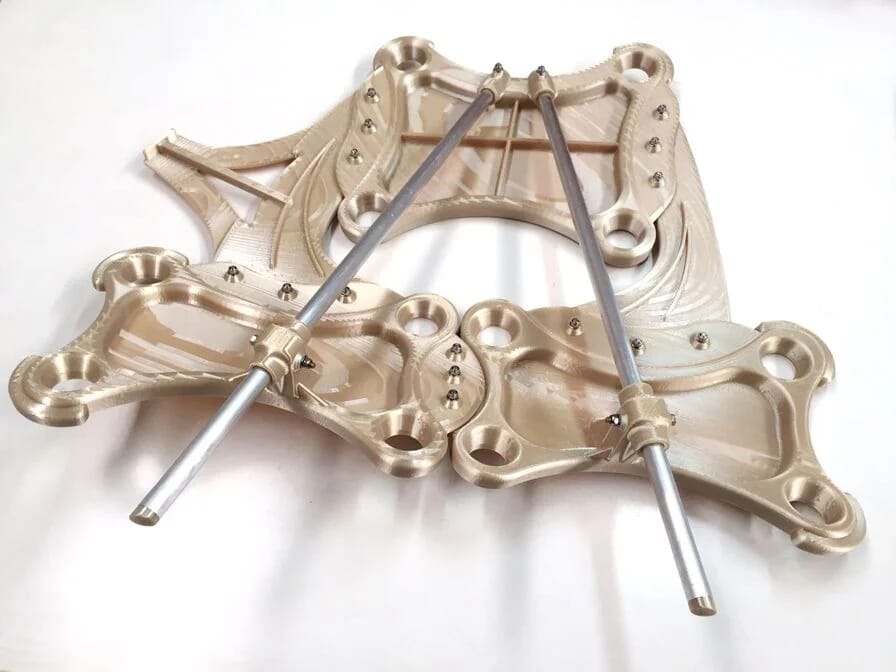
Indaero invested in a Stratasys Fortus 450mc 3D Printer, using FDM technology and ULTEM™ 9085 resin to manufacture robust, lightweight aerospace tooling.
The introduction of additive manufacturing enabled Indaero to redesign tools with complex geometries that accurately match the shape of aircraft panels, improving usability and performance during production.
One example was a project for Aernnova, an Airbus supplier, where Indaero redesigned an aluminium tool used during the manufacture of an Airbus NH90 helicopter.
The original tool weighed 12kg and required two operators to hold it in position while marking drill holes. Using 3D printing, Indaero created a redesigned tool with a curvature matching the helicopter panel, allowing it to support itself during operation. The new tool weighed just 3kg, reducing operator involvement and improving workflow efficiency.
The ability to produce tooling quickly and cost-effectively has also enabled Indaero to support short-run production requirements while reducing reliance on traditional manufacturing methods.
The Results
By integrating Stratasys FDM technology into its workflow, Indaero achieved significant improvements across its tooling operations:
- 66% faster tool production compared with traditional CNC machining
- 50%+ reduction in manufacturing costs for the redesigned tooling solution
- 9kg weight reduction compared with the original aluminium tool
- Improved operator efficiency by reducing the need for multiple operators during assembly processes
The Fortus 450mc and ULTEM™ 9085 resin have become an important part of Indaero’s manufacturing strategy, enabling the company to produce durable, aerospace-grade tools that are lighter, faster to manufacture and tailored to customer requirements.
“The 3D printer has been a game-changer for us. The ability to 3D print curved production tools in robust materials made us realise the importance of having tools that perfectly fit the panels. Not only does it make the work of our operators much easier, it frees up resources and increases our overall productivity.”
Darío González Fernández, CEO, Indaero
New to 3D
Printing or looking
for some support?
- Call: 01782 814551
- Email: info@tritech3d.co.uk