Keeping defence systems operational isn’t easy. Long lead times, complex supply chains, and ageing platforms can make it difficult to source the parts you need – adding an extra layer of stress when you need to repair or upgrade equipment quickly.
This is where additive manufacturing for defence applications really excels. This innovative technology allows you to produce parts directly from digital designs; so you can prototype faster, manufacture low-volume parts without tooling, and produce spares on demand.
But additive manufacturing isn’t the answer to every challenge. The real value lies in understanding when it’s the right technology to use, and how it can strengthen your defence supply chain. Here’s where 3D printing for defence delivers the greatest benefits.
It’s all about the application
First, you need to identify the specific problem you’re trying to solve. For defence teams, this is often linked to equipment availability, maintenance efficiency, or faster development cycles. If a component is holding up a repair job, delaying testing, or proving difficult to source through traditional supply chains, it may be a strong candidate for additive manufacturing.
Common defence applications that are already benefitting from additive manufacturing include:
- Functional prototypes used during design and testing
- Custom tools, jigs and fixtures for maintenance teams
- Simulation and training aids
- UAV or robotic vehicle components
- Replacement parts for legacy systems
- Protective housings, ducts or enclosures
More on these below…
When additive manufacturing makes sense
Once you’ve identified a suitable application, the next step is to assess whether additive manufacturing is the most practical manufacturing route. 3D printing for defence is best used for:
Low-volume or one-off parts
Many defence components are produced in very small quantities. Traditional technologies like injection moulding or CNC machining are too impractical and expensive here, due to tooling and set‑up costs. Additive manufacturing removes this barrier, allowing you to produce parts directly from digital designs and move from prototyping and R&D to production, all in the same system.
Obsolescence and legacy equipment
Defence platforms often remain operational for several decades. During this time, suppliers can disappear and tooling can be lost, making replacement parts increasingly difficult for your team to source. Additive manufacturing enables you to recreate legacy components from digital models, helping you maintain availability and extend the life of mission-critical systems.
Complex or optimised designs
Some components are simply better suited to additive manufacturing than others. Components with complex geometries, internal channels, or integrated features (such as UAV brackets, ducts, or housings) can be produced more efficiently using AM. Your engineers can consolidate multiple components into a single part, reducing assembly time and improving part reliability.
Rapidly evolving defence technologies
Modern warfare is evolving quickly, meaning new technologies need to be developed and deployed almost instantly. With additive manufacturing, you can quickly iterate designs and scale production as your requirements change. A good example is the rise of single‑use drones, where lightweight components can be produced quickly and cost-effectively using AM.
Manufacturing and repair in the field
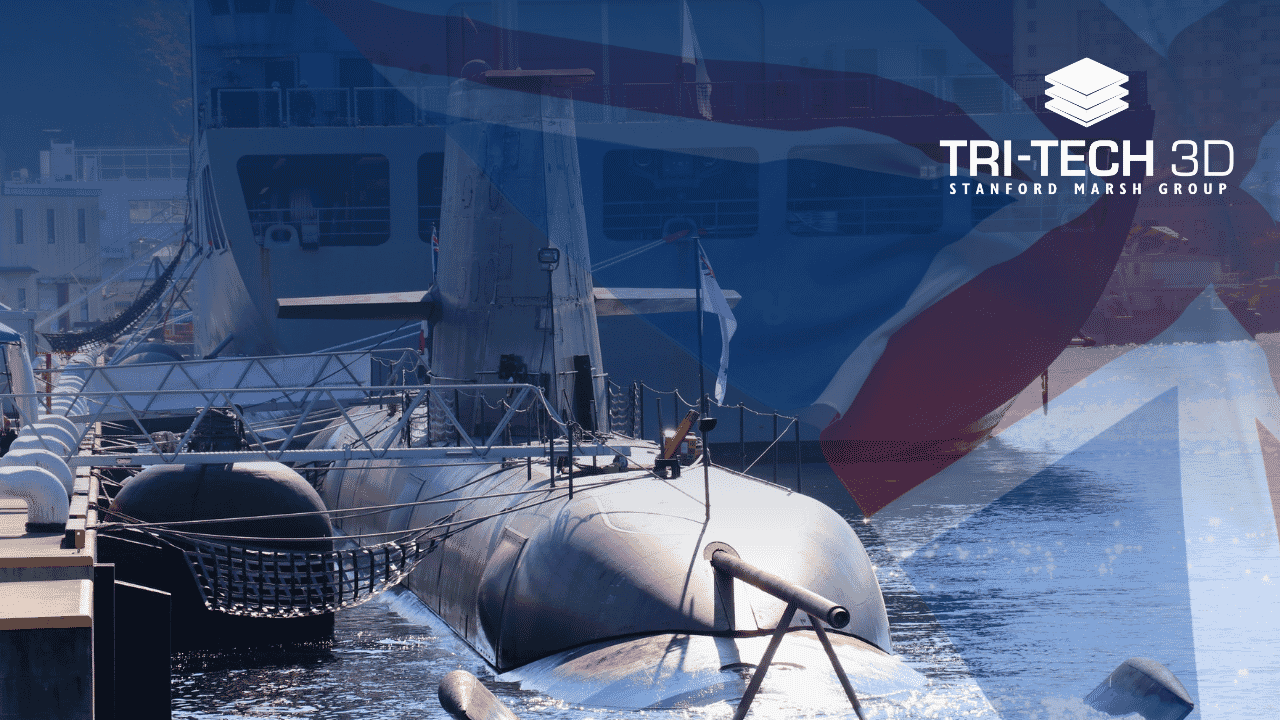
Additive manufacturing can also support repair work in deployed environments. 3D printers are increasingly being installed in mobile units or shipping containers, allowing your team to produce parts closer to the battlefield. In some cases, 3D printers have even been installed aboard naval vessels, enabling complex components to be produced at sea when needed.
Specialised and covert applications
Some additive technologies also support specialised defence use cases. For example, PolyJet technology can produce highly detailed parts that visually replicate real-world objects down to a tee. This capability can then be used to create objects that conceal sensors or listening devices, while still blending naturally into their surroundings.
Certified materials for harsh environments
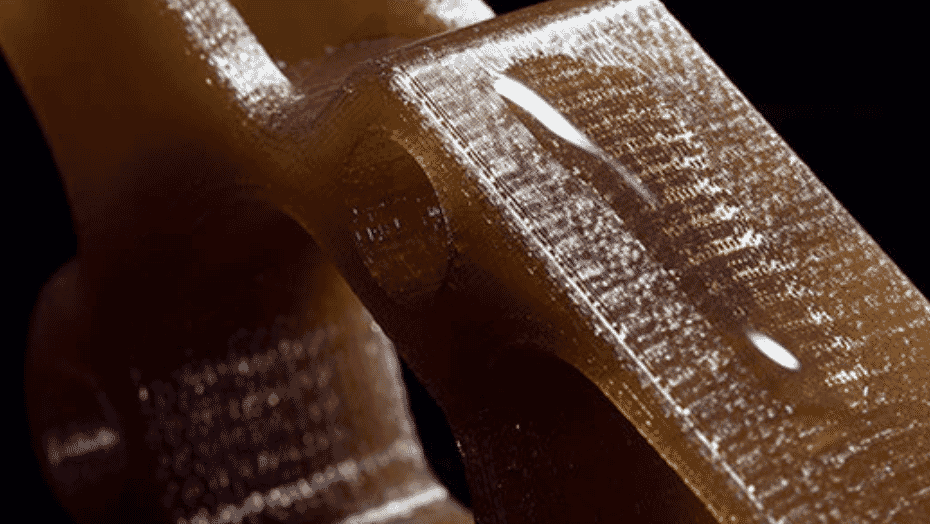
Advances in materials are also expanding defence applications. Stratasys FDM systems support high-performance thermoplastics such as ULTEM™ 9085, which offers excellent strength‑to‑weight performance and flame, smoke, and toxicity (FST) compliance. These properties make it ideal for aerospace and naval environments where safety is critical.
Powering defence innovation with additive manufacturing
At Tri-Tech 3D, we’re here to help you unlock the full potential of 3D printing for defence. We supply an impressive portfolio of Stratasys and UltiMaker secure line printers, supported by an unparalleled range of digital materials, to help you design, produce, and maintain mission-critical equipment with confidence.
Get in touch to discover how additive manufacturing could support your defence programme.
FAQs
What defence parts are best suited to additive manufacturing?
Additive manufacturing is particularly effective for low-volume parts, legacy components, complex geometries, and functional prototypes. In defence environments, this often includes UAV components, housing, ducts, fixtures, and spare parts for ageing platforms.
Can additive manufacturing be used for end-use defence parts?
Yes, additive manufacturing can be used to produce durable end-use defence components. High-performance thermoplastics such as ULTEM™ 9085 are exceptionally strong yet lightweight, and also offer flame, smoke, and toxicity (FST) compliance for demanding environments.
How does additive manufacturing help with defence supply chain resilience?
Additive manufacturing produces parts directly from digital designs, reducing the reliance on traditional tooling and avoiding long supply chains. Complex components can be manufactured on demand and closer to the end of use, helping your defence teams maintain equipment availability.
What technologies are commonly used for defence 3D printing?
Technologies such as FDM and PolyJet are widely used in defence applications. FDM is well suited to strong functional parts and tooling, while PolyJet enables the production of highly-detailed components and prototypes with complex surface finishes.
New to 3D
Printing or looking
for some support?
- Call: 01782 814551
- Email: info@tritech3d.co.uk